
Movement Is the best prevention, says pediatric physiotherapist Eliška Doležílková Lukášová
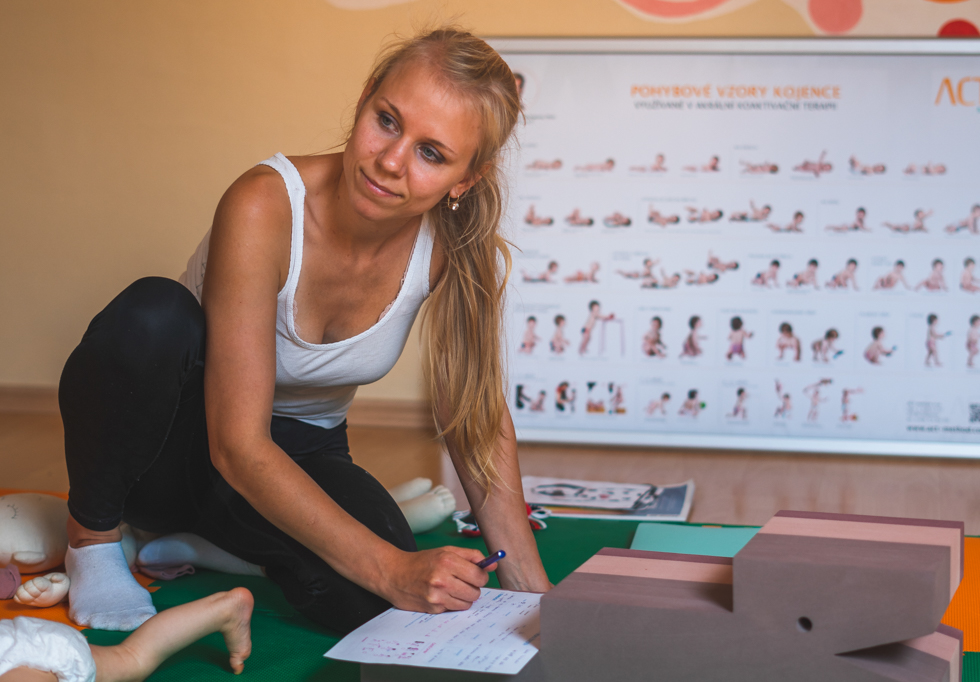 Mgr. Eliška Doležílková Lukášová works in Olomouc, where she runs her own practice Fyzioelbaby.cz. She focuses mainly on infants, toddlers, and preschool-age children. In this interview, we talked about why prevention plays such an essential role in physiotherapy, how parents can recognize when their child’s feet may need help — and when Foot Alignment Socks can make a difference.
How did you become a pediatric physiotherapist, and what do you enjoy most about your work?
 It was a gradual journey. During my studies, I hadn’t planned to work with children at all.
That changed during an internship at a hospital, where I met an experienced therapist specializing in newborns. That encounter opened my eyes to how varied and meaningful this profession can be. After graduation, I started working in a hospital and later joined a neurorehabilitation center for children — a real turning point for me. That’s when I realized that pediatric physiotherapy is the field that truly fulfills me.
Today, I work independently in Olomouc (at Fyzioelbaby.cz), focusing on children without neurological diagnoses. I have completed several specialized courses and gradually built my practice around pediatric care.
What I enjoy most is the creativity and playfulness of the work. Every child is different, which means I’m constantly inventing new ways to turn exercise into play. Children have fun — and at the same time, they improve. Seeing their joy and progress is the most rewarding part of my job.
You mostly work with children and adolescents. Do you approach toddlers and older, sporty kids differently?
Most of my patients are infants, toddlers, and preschoolers — I work with school-age children less often. The main difference lies in communication and approach. With little ones, everything needs to be turned into a game. Instead of telling them to “stand on one leg,” we play “let’s be a stork,” or balance on stones during “rock-hopping.” Older kids can already follow direct instructions.
When it comes to young athletes — often four- or five-year-old hockey or football players — I focus mainly on keeping their bodies free to develop naturally. I recommend sufficient recovery and, when necessary, a break from structured training. Overall, I see sport as highly beneficial: children move naturally, strengthen muscles, and improve coordination.
The key is to make sure that overloading doesn’t lead to early signs of asymmetry, poor posture, or strain on the feet.
How can parents tell that something isn’t quite right and it’s time to see a physiotherapist?
Between the ages of roughly three and six, parents should visit a physiotherapist preventively, not only when a problem appears. A specialist can assess how the child moves, stands, and develops — and detect issues early. Parents often hear from pediatricians or others that “they’ll grow out of it,” and then stop paying attention. But when they come later, it often feels like we’re “putting out a bigger fire.”
Prevention should be as natural as regular medical check-ups. Parents see their child through the eyes of love — which sometimes makes it harder to spot what a trained professional notices immediately.
“Flat feet” are often discussed. How do you view this term?
That’s an excellent question, because “flat feet” is both overused and misleading.
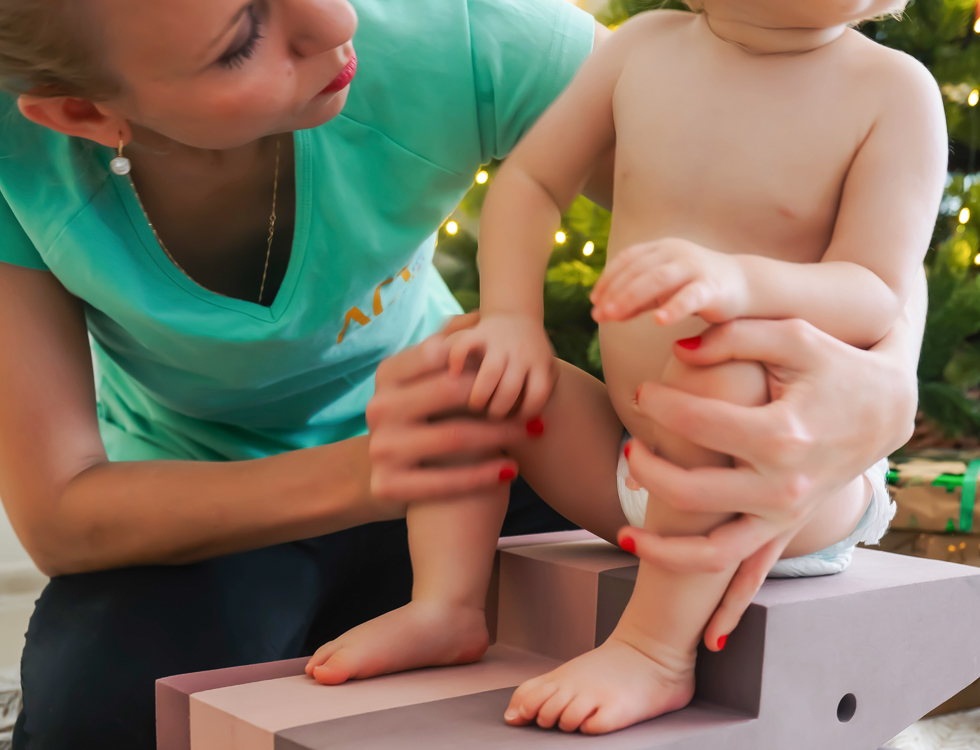
It’s common for parents to be told — sometimes quite casually — that their child has flat feet. They come worried and want to act immediately. In most cases, though, it’s not true flatfoot but a physiological foot that only appears flat until examined properly. Often, it’s what we call a flat-valgus foot, a combination of a slightly lowered arch and inward-tilted heel (valgus position).
This posture gives the impression of a “flat” foot, but it’s not pathological. True flatfoot in children is very rare — I’ve only seen one real case. A proper diagnosis usually requires an X-ray, which isn’t done routinely in children, so the term is often used inaccurately.
As for a full footprint on a podoscope: in small children, it’s usually not a concern. For one-year-olds who have just started walking, it’s perfectly normal — the arch develops gradually with age and movement. What matters is monitoring — ideally re-checking in several months or a year to see if the arch is forming as expected. If development goes in the right direction, the initial state was entirely physiological.
What harms children’s feet the most — and what helps them thrive?
The biggest problem is persistent poor movement habits: sitting in a “W” position, knock-knees, or tight shoes that restrict the foot’s natural motion. Even small heels are not ideal for children.
What helps most is varied movement — walking barefoot (when feet are healthy), wearing barefoot shoes, and stimulating the soles through different surfaces. Walking on grass, stones, carpets, or uneven terrain — variety is key. Children’s feet need opportunities to work and feel.
How important is movement and barefoot walking in preventing foot problems?
Movement is essential. Genetics play a role, but regular activity in nature — running, jumping, walking on uneven ground — is vital for healthy foot development.
Barefoot walking is great, but not for everyone. If a child has an issue, it’s better to alternate. Healthy children can be barefoot often, while those with problems need targeted stimulation and proper support. Variety is what keeps the body developing well.
Do you feel that parents are more aware of prevention today?
Yes, definitely. I see a clear difference between cities and smaller towns. In Olomouc, where I work, about 60 % of parents come purely for preventive reasons. Outside the city, they usually seek help only when a problem appears — probably because access to specialists is more limited. Still, overall awareness is growing: parents are more curious, eager to learn, and that’s wonderful.
What drew you to Foot Alignment Socks, and when do you usually recommend them?
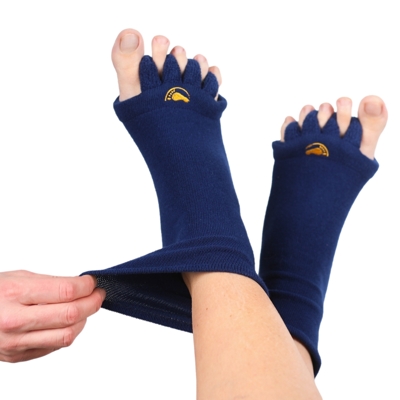
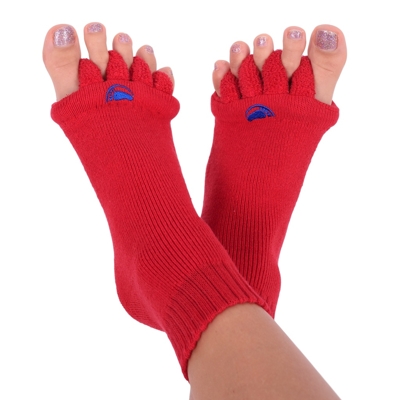
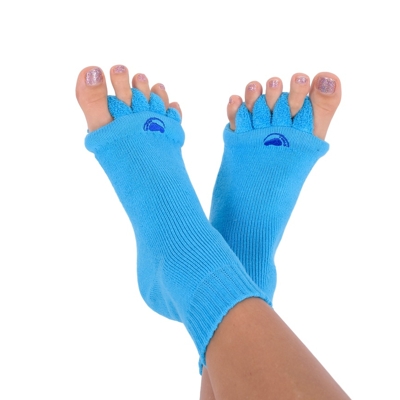
I’ve known Foot Alignment Socks for about two or three years. At first, I started using them myself to better understand their effects and take care of my own feet. I soon noticed improvements — better circulation, relief, a feeling of lightness. After a few weeks, I began recommending them to people around me, especially those who stand for long periods at work.
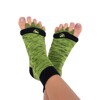
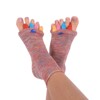
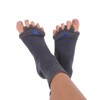
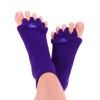
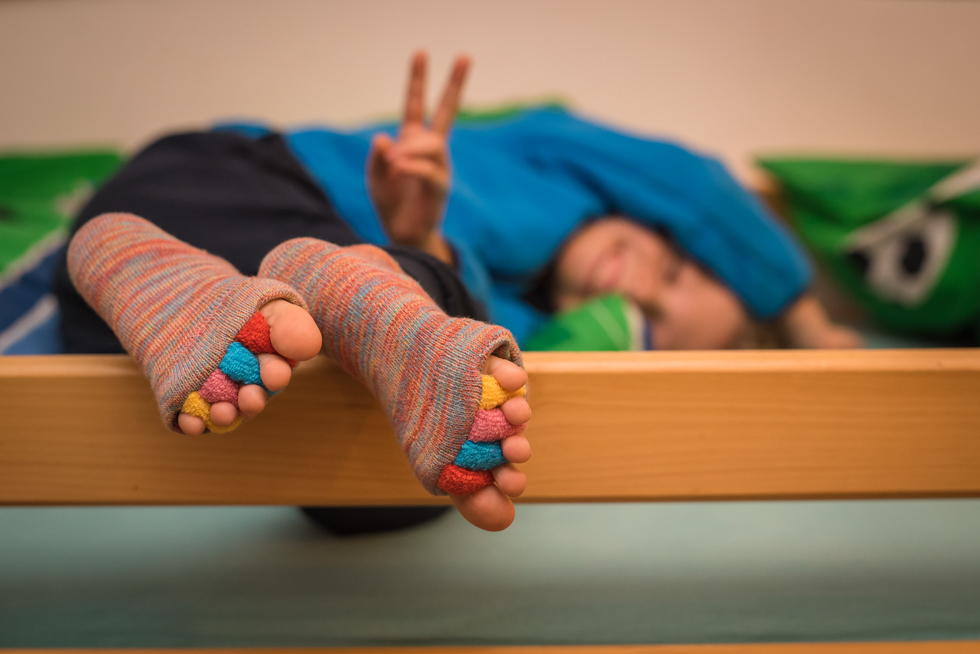
I only discovered children’s Foot Alignment Socks about six months ago and became very interested. I recommend them mainly for young athletes — hockey players, runners, footballers — whose feet are often under strain. They can also be very helpful for children showing early signs of hallux valgus (toe misalignment). Of course, the underlying causes need to be addressed too, but Foot Alignment Socks are an excellent complementary tool.
Parents often come overwhelmed by online information. What advice would you give them?
Parents are indeed overloaded and sometimes frustrated. My advice is simple: stop reading too much and instead find a trusted professional. There are many ways to check others’ experiences — for example, in Facebook groups or local communities. Reviews from real parents are often more reliable than social media hype. Instagram popularity or follower counts don’t guarantee expertise.
The internet is a great source of knowledge, but it must be approached with common sense. Extreme opinions spread faster than balanced ones, so don’t panic when someone claims, “this definitely ruins your child’s feet” or “you have to fix this immediately.”
Every child is unique — there are no one-size-fits-all rules.
Finally, if you could share one simple tip for keeping children’s feet healthy, what would it be?
Give children as much natural movement as possible — running, climbing, jumping.
Create an environment that encourages free, joyful movement, not performance.
And remember: shoes should protect the feet, not shape them. Footwear is there to guard against cold or rough surfaces, not to dictate how a foot should develop.
Most importantly — children imitate their parents. If you move, they will too.