
Hammer toes don’t have to be an unsolvable problem. Try these exercises to get your toes and your entire foot moving again.
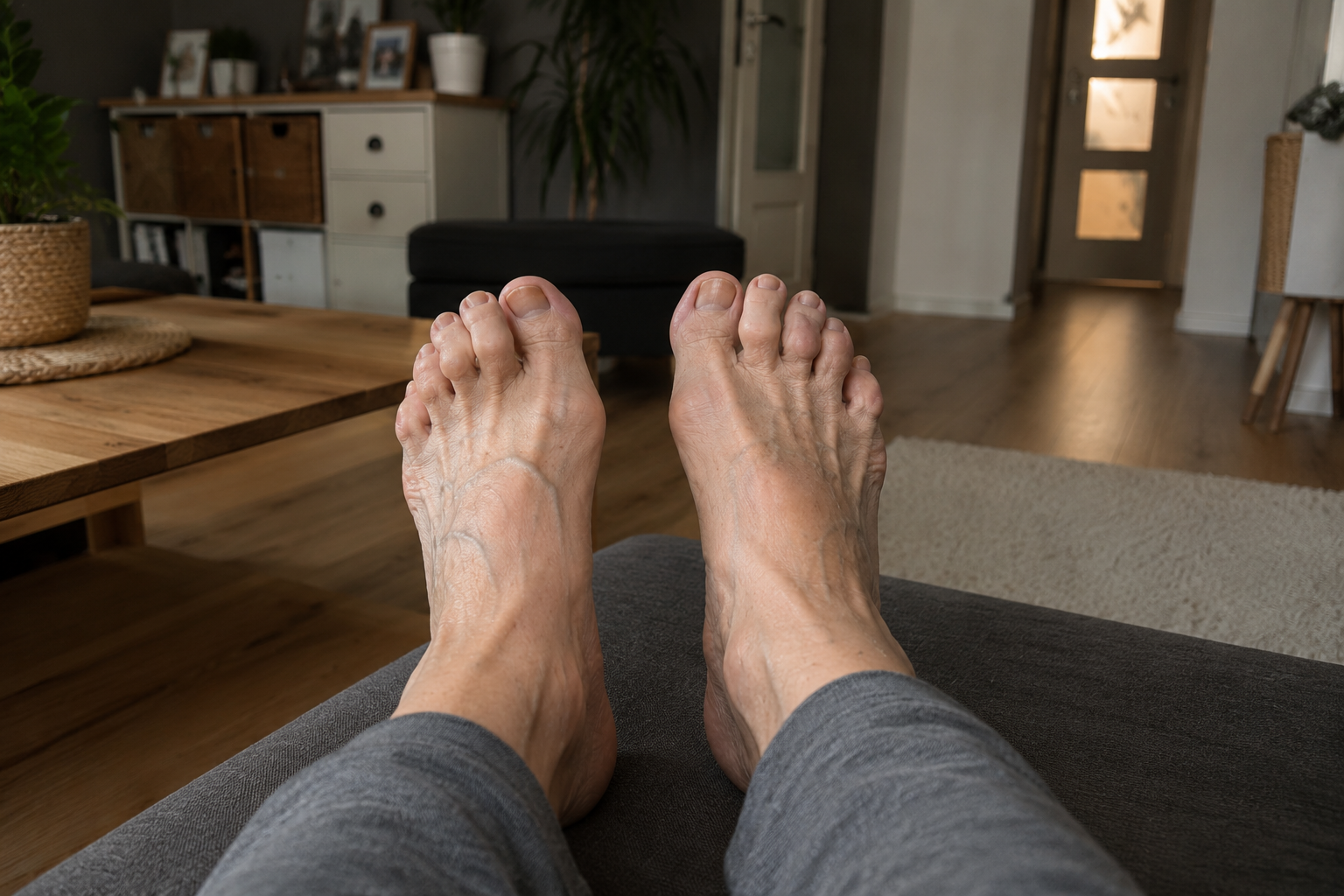 Many people first notice hammer toes because of their appearance. A toe begins to curl, it feels uncomfortable inside a shoe, calluses may develop on top, and walking is no longer as comfortable as it once was. However, this is not just a cosmetic issue. A hammer toe develops when a toe bends at the middle joint and gradually loses its mobility. It is often caused by a combination of unsuitable footwear, weakened intrinsic foot muscles, excessive pressure on the forefoot, and changes in the foot arch.
The good news is that if the toe is still flexible and can be moved, regular exercise may help relieve tension, improve mobility, and support better foot function. However, if the deformity has progressed to the point where the toe can no longer be straightened even by hand, it is advisable to consult an orthopedic specialist, podiatrist, or physiotherapist. The distinction between a flexible and a rigid joint is an important factor when choosing the most appropriate treatment approach.
If you are not sure whether you are dealing with hammer toes, we recommend reading our article What Is the Difference Between Hammer Toes and Claw Toes? first. In it, we explain that hammer toes are often associated with a collapsed foot arch and may sometimes occur alongside a bunion (hallux valgus).
Before You Start Exercising: Pain Should Not Be Part of the Exercise
With hammer toes, more force is not better. Quite the opposite. The goal is not to force the toes into a straight position, but to gradually restore their mobility, create more space for them, and improve the way they work together with the rest of the foot.
Ideally, perform the exercises barefoot, in a relaxed setting, and without pain. A mild stretching sensation or the feeling of muscles working is perfectly normal. Sharp pain, tingling, numbness, redness, or worsening swelling, however, are not. In its patient information materials, the East Sussex Healthcare NHS Trust recommends seeking professional advice if you experience severe pain, tingling, or numbness, or if you have diabetes, as foot problems can be more serious in people with diabetes.
1) Gentle Toe Stretching
This exercise is particularly useful if your toes feel stiff, tight, or cramped inside your shoes. The American Academy of Orthopaedic Surgeons (AAOS) lists gentle manual stretching of the toes as one of the recommended approaches for managing hammer toes.
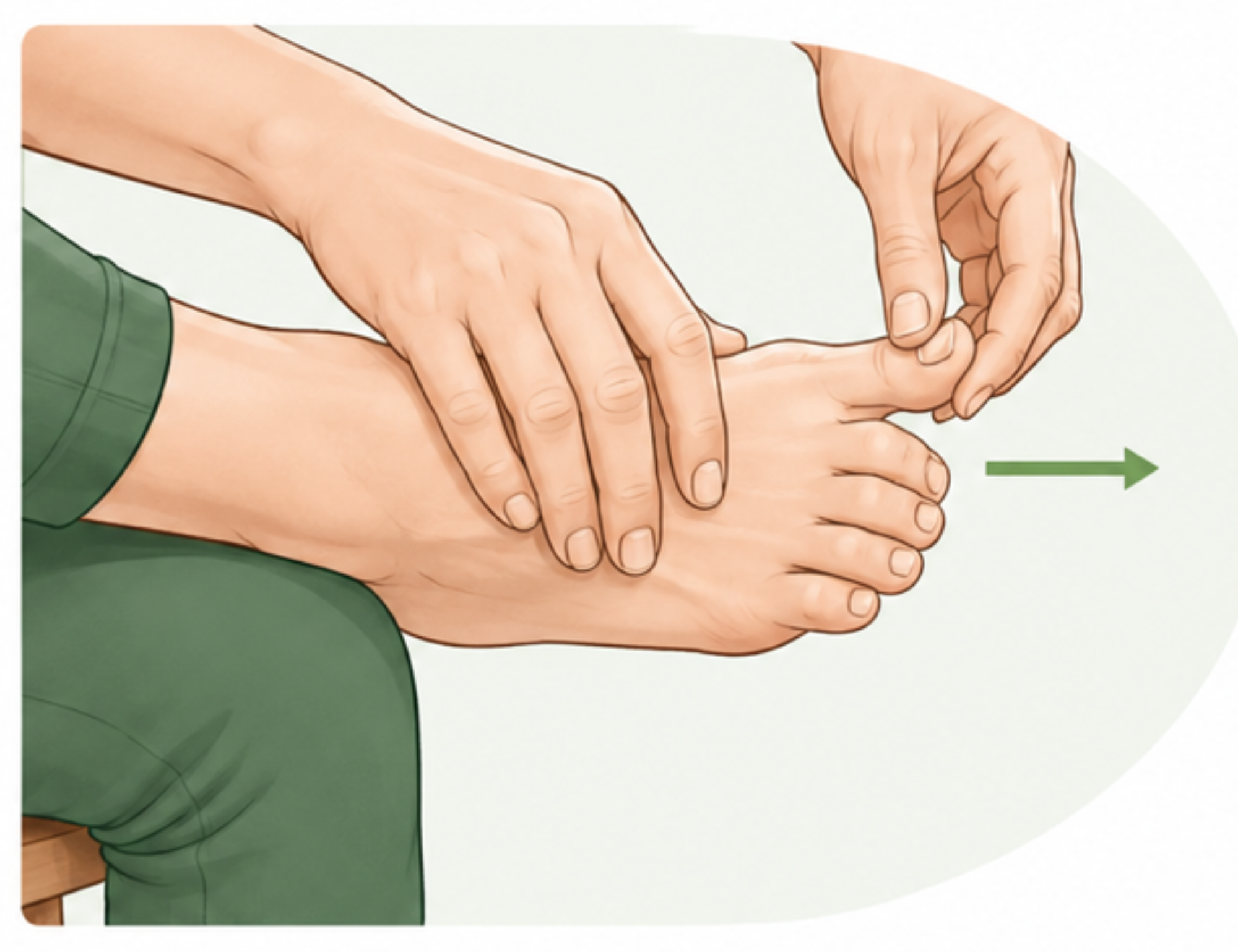
Sit on a chair or on the floor and place one foot over the opposite leg so that you can comfortably reach your toes. Hold one toe between your thumb and index finger. With your other hand, you can support the forefoot to keep the entire foot from moving.
Gently pull the toe lengthwise, away from the foot. Do not use force. Imagine that you are simply creating a little more space within the joint. Then gently move the toe up and down. The movement should be small, slow, and comfortable. If the toe allows, you can also add gentle side-to-side movements.
Spend approximately 30 to 60 seconds on each toe. You can repeat the entire exercise daily, ideally before performing the other exercises. A relaxed toe will engage more effectively during active exercise and will be less likely to return immediately to a cramped, curled position.
A similar approach to toe relaxation is also described in our article Exercises for Bunions That Can Help, where we recommend gently releasing tension in the sole of the foot and the toes before moving on to active exercises.
2) Towel Scrunches
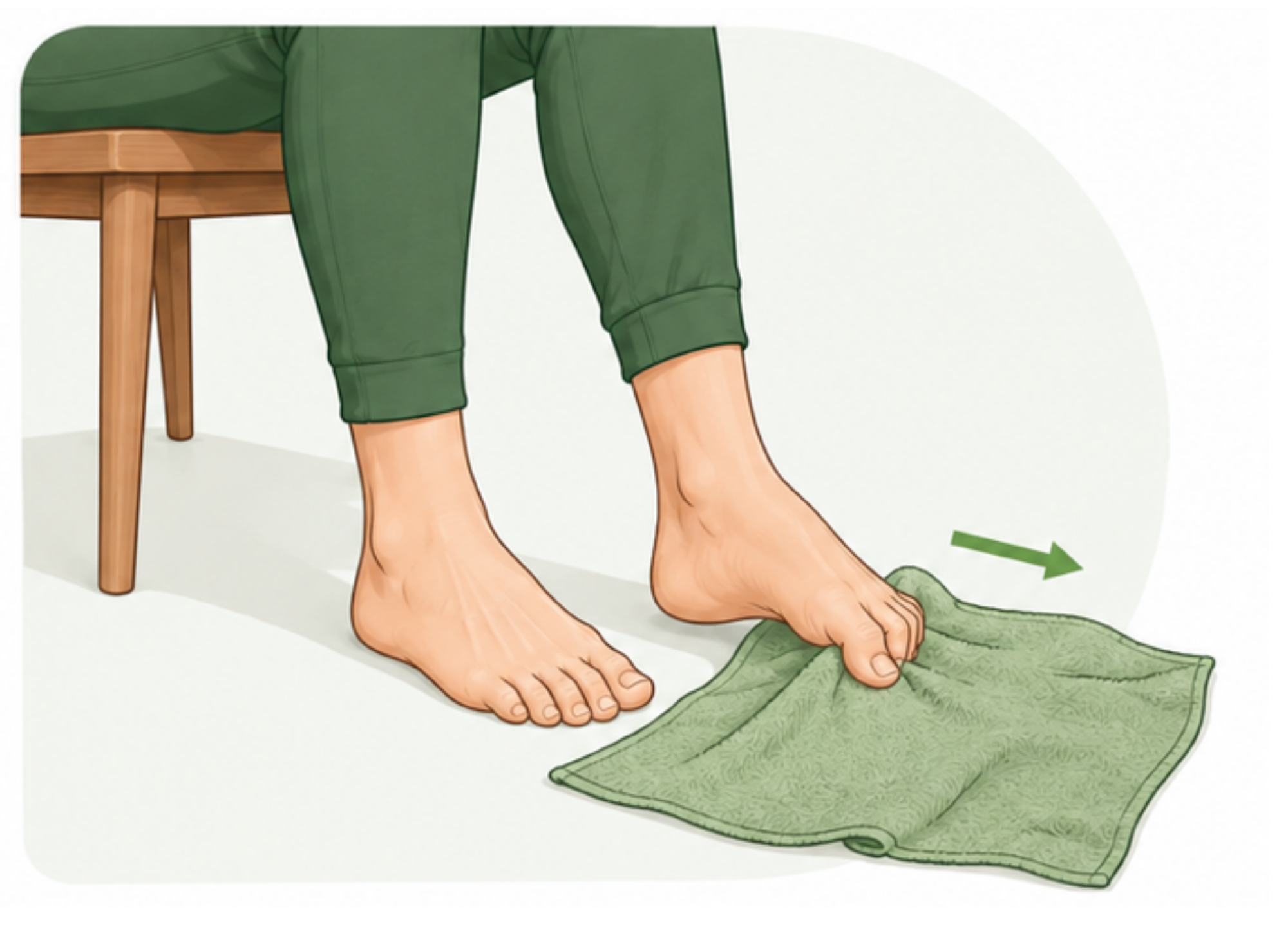
Towel scrunches are among the most commonly recommended exercises for hammer toes. The AAOS includes them as an exercise that can help strengthen the toes and restore muscular balance. The principle is simple: the toes learn to work actively again, but in a safe seated position.
Sit on a chair and place your foot flat on the floor. Position a small towel or cloth under your toes. Keep your heel on the ground. Using your toes, slowly pull the towel toward you. The goal is not to curl your toes forcefully into a cramp. Instead, try to engage the pads of your toes rather than just their tips.
Once you have pulled the towel toward you, relax your foot for a moment. Then straighten the towel again and repeat the exercise. Start with around five repetitions on each foot. If the exercise feels comfortable, you can gradually increase the number of repetitions.
It is important to make sure that the toes do not curl excessively during the exercise. If you experience cramping, pain in the forefoot, or a sensation that your toes are “clawing” into the floor, reduce the intensity. With hammer toes, the goal is not to strengthen the excessive curling that contributes to the deformity, but rather to engage the small intrinsic muscles of the foot with as much control and precision as possible.
3) Picking Up Small Objects with Your Toes
Another useful exercise is picking up small objects from the floor with your toes. The AAOS recommends lifting objects from the ground with the toes as one of the exercises for hammer toes. Michaela Píšková, a physiotherapist at FLOW Rehab Care, also recommends picking up small objects as a way to activate the muscles of the foot.
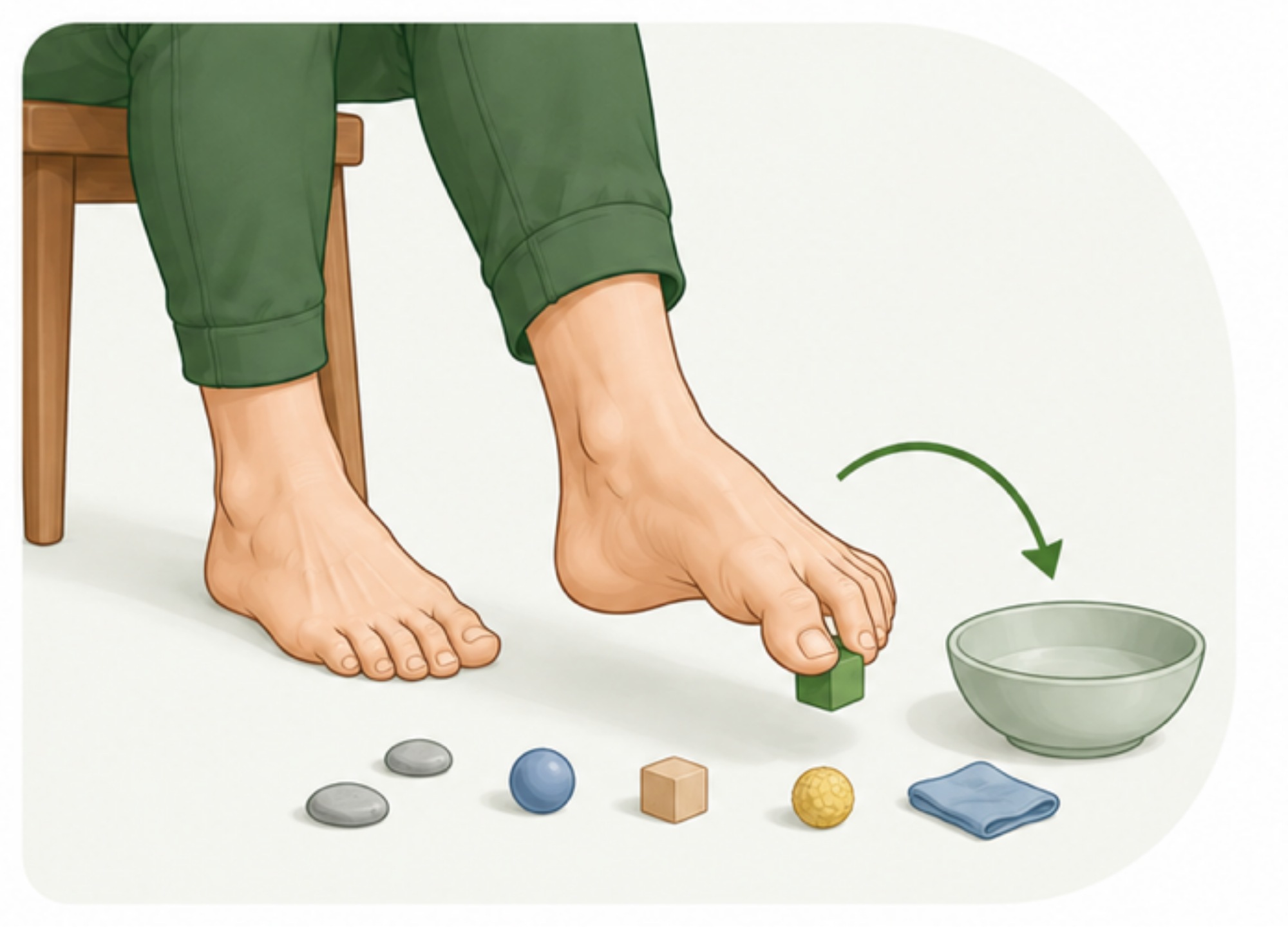
Place several small objects on the floor. These can be small stones, building blocks, a handkerchief, a soft ball, or larger beads. Avoid sharp, slippery, or very small objects that would require you to grip excessively with your toes.
Sit on a chair with your feet flat on the floor and try to grasp an object with the toes of one foot. Lift it only as high as feels comfortable, then place it beside you or into a bowl. Relax your toes and continue with the next object.
Start with 5 to 10 objects per foot. The goal is not speed, but precision and awareness in the toes. If you find that your toes do not seem to cooperate at all, don’t worry. Even the attempt to grasp an object sends a signal to the foot that it needs to start working again.
4) Arch Activation (Short Foot Exercise)
Hammer toes are often not just a problem of the toes themselves. They are closely related to how the entire foot functions, particularly the forefoot and the arch. The Short Foot Exercise helps activate the small intrinsic muscles of the foot and improve load distribution. This type of activation is more targeted for hammer toes than simply curling the toes, as it teaches the foot to function without reinforcing the movement pattern that contributes to the deformity. The key is to perform the exercise without curling the toes, as if you were gently drawing the front of the foot toward the heel.
Sit on a chair and place your foot flat on the floor. Keep your heel firmly in place. Let your toes rest naturally without curling them. Now imagine that you want to slightly shorten your foot: the joint beneath the big toe and the forefoot gently move closer to the heel, while the toes remain long and relaxed.
You should feel a slight lift through the middle of the foot, but your toes should not grip into the floor. This is a common mistake. With hammer toes, it is important for the foot to learn to function without further curling of the toes.
Hold the position for 3 to 5 seconds, then relax. Repeat 8 to 10 times. You can perform this exercise daily. Once you can do it comfortably while seated, you may carefully progress to performing it while standing.
If you would like to learn more about why the arch is so important for toe health, we recommend continuing with our article The Difference Between the Transverse and Longitudinal Arch and How to Support Their Function. Among other topics, it explains how a weakened arch may be linked to toe deformities.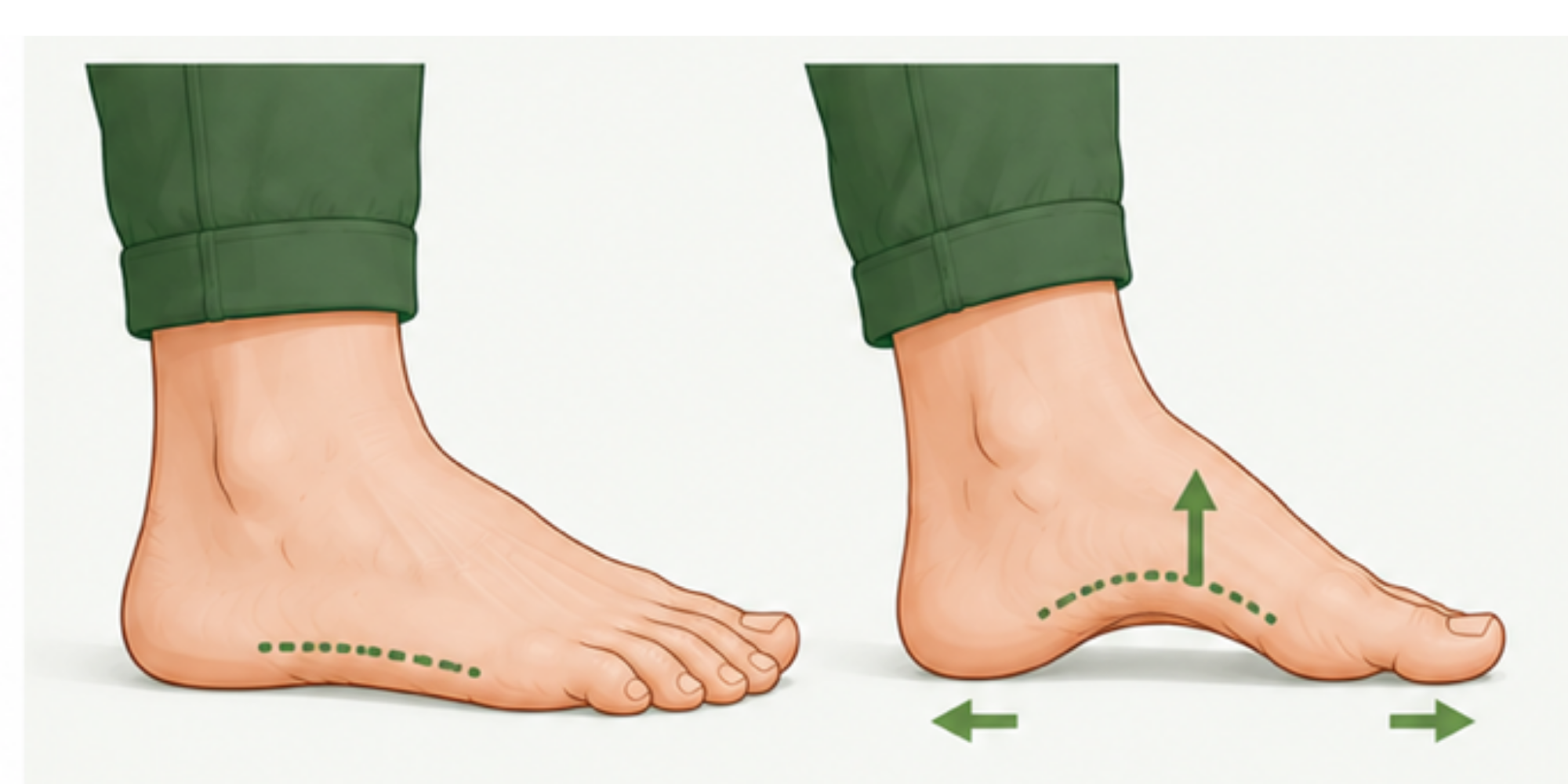
5) Toe Spreading and “Piano Toes”
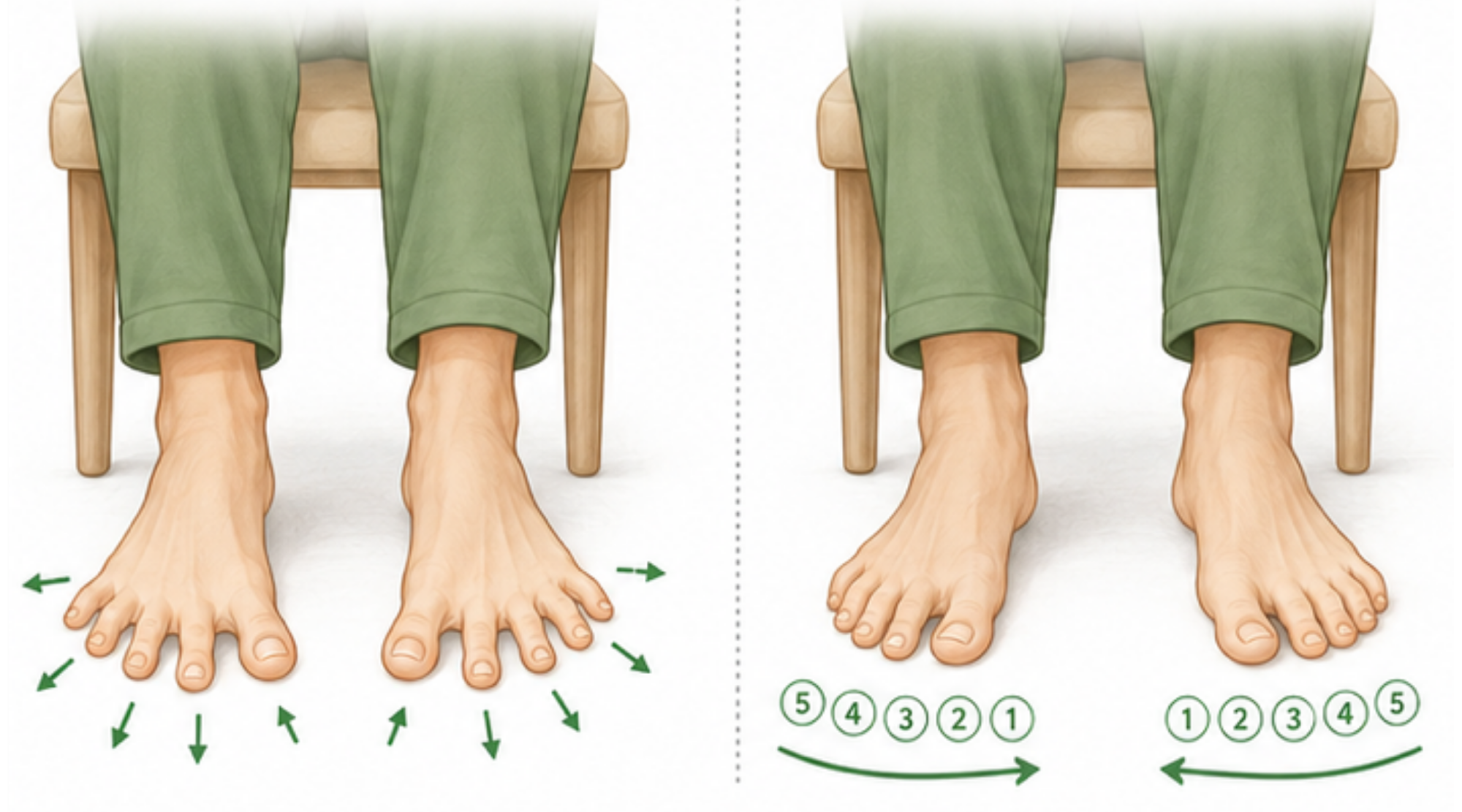
This exercise may look simple, but many people find it surprisingly challenging. It teaches the toes to move independently, improves coordination, and encourages them to spread apart. The “piano toes” exercise, in which the toes are lowered one by one like piano keys, is a well-established physiotherapy exercise for improving toe coordination. Equally beneficial is consciously pushing off from all five toes while walking.
Sit on a chair with your feet flat on the floor. First, try to spread your toes apart like a fan. Not all of them may move. In fact, almost nothing may happen at first. That does not mean you are doing the exercise incorrectly. Sometimes the brain and the foot simply need time to reconnect.
Next, try the “piano toes” variation. Keep your heel on the floor and your foot relaxed. Try to lower your toes one by one, starting with the little toe and moving toward the big toe, as if you were playing the piano. Then try the opposite direction. If this feels difficult, use your hand to help. Gently place your toes in the desired position and try to hold them there for a few moments.
Practice for 1 to 2 minutes at a slow, controlled pace. This exercise is particularly beneficial for people who feel that their toes “have a mind of their own” and cannot be moved independently.
What Else Can You Do for Hammer Toes?
Exercise is important, but it is usually not enough on its own. Hammer toes primarily need more space, less pressure, and consistent care.
Start with your footwear. Shoes should have a sufficiently wide toe box, a low heel, and enough room for the longest toe. The AAOS recommends avoiding tight, narrow shoes and high heels. In its patient information materials, the East Sussex Healthcare NHS Trust recommends well-cushioned shoes with a low heel and enough width to allow the toes to move comfortably. You can also find our article 5 Tips for Choosing the Right Footwear on the blog.
Gentle foot massage, self-massage with a ball, walking on uneven surfaces, and regular recovery can also be beneficial. With hammer toes, it is worth paying attention to the foot arch as well, since a collapsed arch can alter the way weight is distributed across the forefoot and place additional strain on the toes.
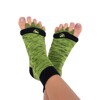
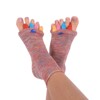
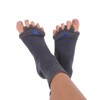
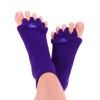
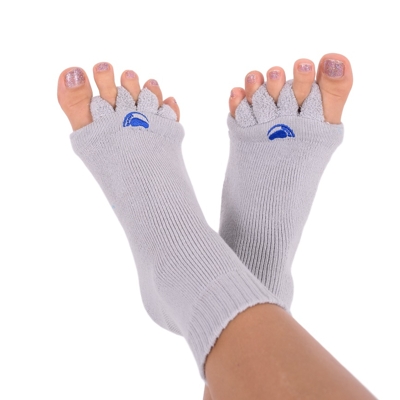
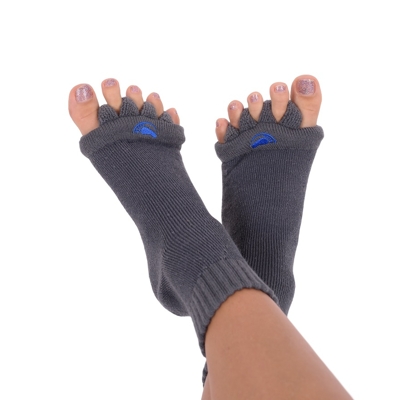
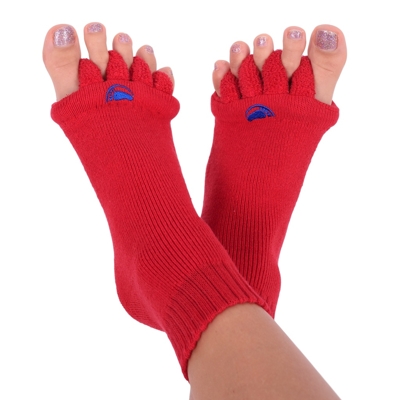
Foot Alignment Socks can also be a valuable addition to your foot care routine. Their built-in toe separators help create space between the toes, support circulation, and promote relaxation of both the toes and the feet. As we mentioned in our article on hammer toes and claw toes, the most effective approach to prevention and supportive care is often a combination of spacious footwear, walking on uneven surfaces, stretching and mobility exercises, regular recovery, and wearing Foot Alignment Socks.

If your toes have been painful for a long time, if you develop corns or calluses, or if you feel that the deformity is getting worse, don’t wait. A physiotherapist, podiatrist, or orthopedic specialist can help determine whether the problem is still functional—meaning it can be influenced by exercise and lifestyle changes—or whether it has become structural, with the toe fixed in position and requiring a different approach. A podoscope assessment can also reveal how you distribute weight across your feet and whether the problem may be linked to the arch, ankles, or overall body alignment. We discuss this in more detail in our article What Can a Podoscope Reveal About Your Feet?
Be Patient: Your Toes Need Time
Hammer toes do not usually develop within a week, and they cannot be corrected within a week either. However, regular exercise can help improve mobility, reduce tension, relieve pressure inside footwear, and support better overall foot function. With flexible deformities, there is the greatest chance of stabilizing the condition and preventing it from worsening unnecessarily.
Give your feet a few minutes of attention every day. Stretch your toes, keep your feet moving, wear comfortable shoes, and in the evening, allow them to relax in Foot Alignment Socks. Prevention is always easier than dealing with an advanced deformity.