
How to Choose Winter Shoes That Won’t Hurt Your Feet
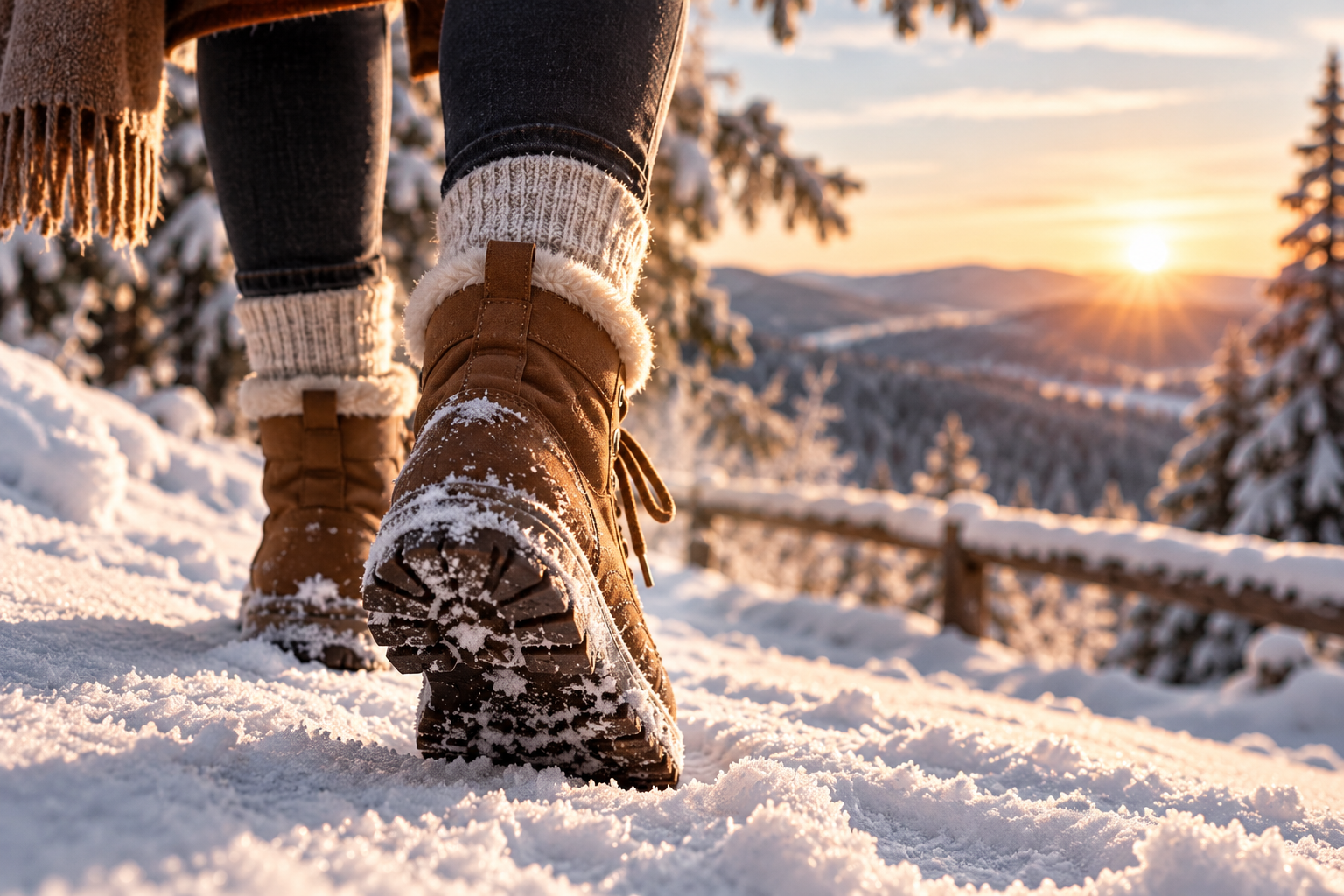 The weather is getting colder, and winter collections are already appearing in stores. When choosing winter shoes, we usually focus on whether they are warm, waterproof, and stylish. However, your feet spend more consecutive hours in winter shoes than in any other type of footwear. If your shoes are too narrow in the toe box or too short, you’ll feel the discomfort with every step for months. For some people, poorly fitting shoes can even affect toe alignment. We’ll show you what to look for when choosing winter footwear so your shoes last all season while keeping your feet healthy and warm.
Why Winter Shoes Deserve More Attention Than Summer Shoes
In summer, our feet alternate between sandals, sneakers, and walking barefoot. They have room to breathe and move freely. Winter is different. In the morning, you slip your feet into warm, often stiff, high-cut boots and don't take them off until the evening. You may spend as many as ten hours a day in winter footwear, for several months in a row.
There's another factor that's easy to overlook when trying on winter shoes: thicker socks. A shoe that fits perfectly in the store with a thin sock can suddenly feel tight when worn with a wool sock. Your toes get squeezed together, your big toe presses against the front of the shoe, and your forefoot has no room to spread naturally with each step.
Prolonged pressure on the toes is one of the factors that can contribute to the development of bunions (hallux valgus) or hammertoes. A single season in tight shoes won't necessarily cause a deformity. However, if you buy winter shoes that are slightly smaller than your feet need year after year, you're adding months of unnecessary pressure. You can learn more about the effects of wearing shoes that are too small in our article Wearing Shoes That Are Too Small Can Cause Many Problems.
What to Look for When Choosing Winter Shoes
1. Room for Your Toes Matters More Than the Shoe Size on the Box
Shoe sizes vary between brands, so don't rely on the fact that you "always wear a size 39." What matters is how the shoe actually fits your foot. There should be approximately one centimetre of extra space in front of your big toe, roughly the width of your thumb. This extra room is even more important in winter, when you wear thicker socks and your foot slides forward inside the shoe as you walk.
Width is just as important. Your toes shouldn't touch the sides of the toe box or be squeezed together. Narrow, pointed-toe shoes may look elegant, but they push the big toe towards the other toes. And that's exactly the position you want to avoid.
2. Try the Insole Test
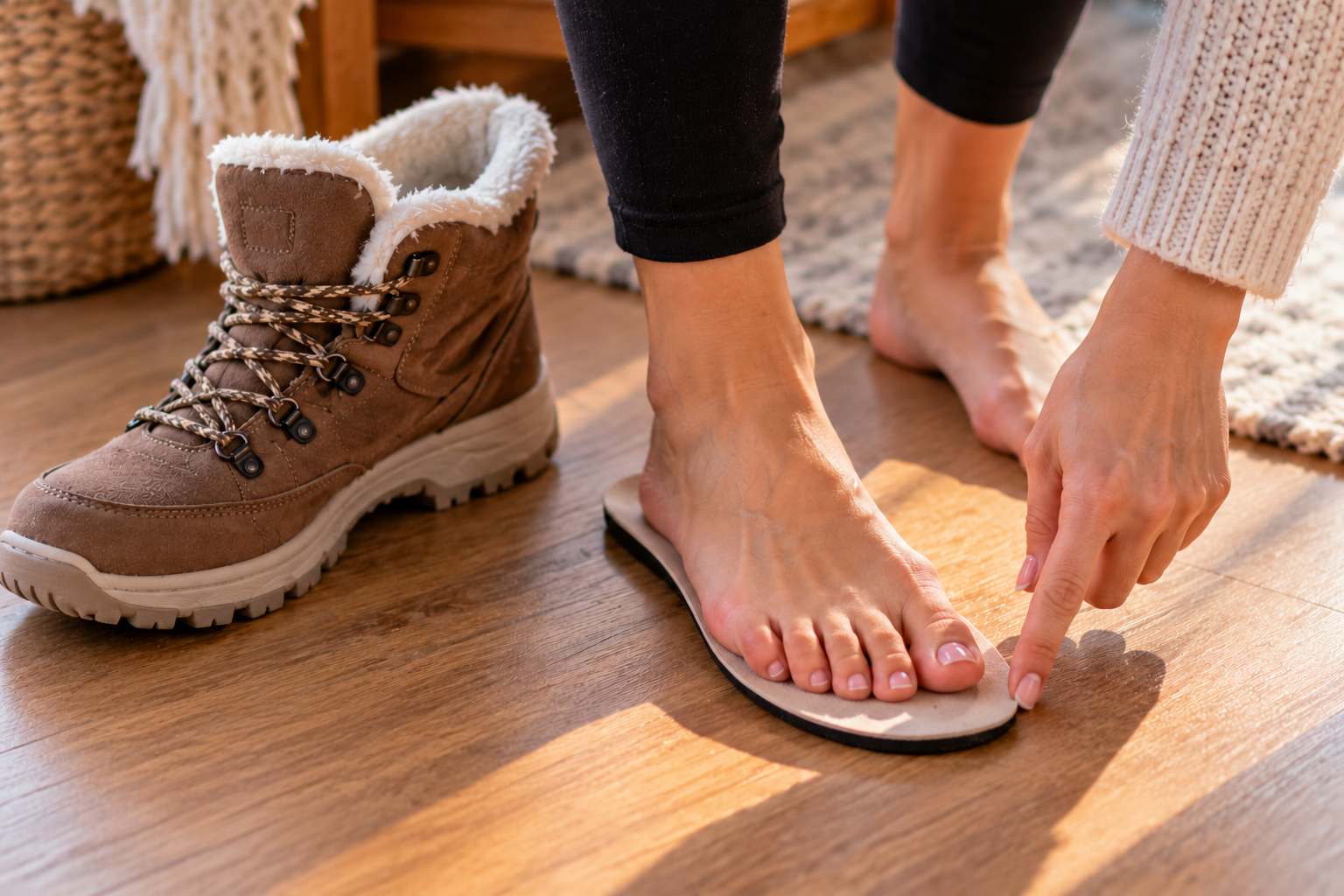
If the shoe has a removable insole, take it out and stand on it. You'll immediately see whether your toes or heel extend beyond the edges and whether there's enough room in front of your big toe. It's a quick and much more reliable test than judging the fit when you first try on a new pair of shoes, as the soft lining can initially hide potential fit problems.
3. Try Shoes On in the Afternoon and Wear Winter Socks
Throughout the day, your feet naturally swell slightly, especially if you spend a lot of time standing or walking. That's why it's best to try on shoes in the afternoon or early evening and bring the socks you'll actually be wearing with them. Try on both shoes and walk around in them. Very few people have two feet that are exactly the same size, so always choose shoes that fit your larger foot.
4. Firm Heel Support and a Secure Fit
Your heel should fit securely inside the shoe without slipping up and down as you walk. The heel counter should be firm enough to provide proper support. Choose shoes with laces or Velcro fastenings that you can adjust to fit your feet. In loose slip-on shoes, your foot slides forward with every step, causing your toes to hit the front of the shoe. This can also make you feel less stable on slippery pavements.
5. A Sole That Bends Where Your Foot Naturally Bends
Pick up the shoe and try bending it. It should bend at the forefoot, where your toes naturally flex, rather than in the middle of the foot. At the same time, it shouldn't twist easily like a piece of cloth. The outsole should have a deep tread pattern that provides good grip, even on wet snow. Slips and falls are among the most common winter accidents, so this is an important detail.
6. Choose a Sensible Heel Height
Stability is essential in winter. A wide, stable heel of up to four centimeters is a sensible compromise for everyday wear. Higher heels shift your weight onto the forefoot and push your toes towards the front of the shoe. On icy surfaces, every step becomes a balancing act.
If you're considering barefoot winter shoes, they can be a good choice for your toes, as the wide toe box gives them plenty of room. However, the transition from conventional footwear should be gradual. Thin soles place greater demands on the muscles of your feet and calves, and your body needs time to adapt. You can learn more about when walking barefoot benefits your feet and when it may cause excessive strain in our article Walking Barefoot Is Great, but What Are the Potential Problems?
Tight Shoes Won’t Keep Your Feet Warm – Quite the Opposite
Many people buy winter shoes that are too small, believing that "tighter shoes keep your feet warmer." In fact, the opposite is true. It's not just the lining that keeps your feet warm, but the layer of warm air trapped between your feet, socks, and the inside of your shoes. When shoes squeeze your feet, this insulating layer disappears. The pressure can also restrict blood circulation in your toes and feet, and it's the blood flow that helps keep them warm. The result? Cold toes, even in expensive insulated winter boots. If you regularly struggle with cold feet, read our article Suffering from Cold Feet? Find Out What Can Help.
The second enemy of warm feet is moisture. Wet socks draw heat away from your feet much faster than dry ones. That's why two things are important. Your shoes should be waterproof on the outside but also breathable, allowing moisture to escape and preventing your feet from becoming sweaty. Choose socks made from wool, ideally merino wool, or moisture-wicking technical fabrics. Cotton absorbs sweat and retains moisture for a long time.
At work, at school, or at home, take off your winter boots and change into indoor shoes. Spending the entire day sitting in warm boots at the office can leave your feet sweaty, and then you head back out into the freezing cold.
Give Your Feet Back What Winter Takes Away
Even the best-fitting winter shoes are still an enclosed space where your toes have less freedom to move than they need. That's why it's worth giving your feet some relief in the evening.
Start with something simple. When you get home, take off your shoes and let your feet move freely for a while. Spend a few minutes rolling the soles of your feet over a tennis ball or massage ball, stretch your toes, and try actively spreading them apart several times. For inspiration, check out our articles Hammertoes Don't Have to Be an Unsolvable Problem and Exercises for Flat Feet. A lukewarm foot bath, rather than a hot one, can also help soothe cold feet.
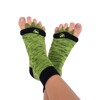
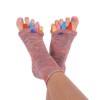
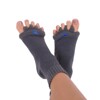
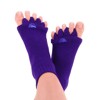
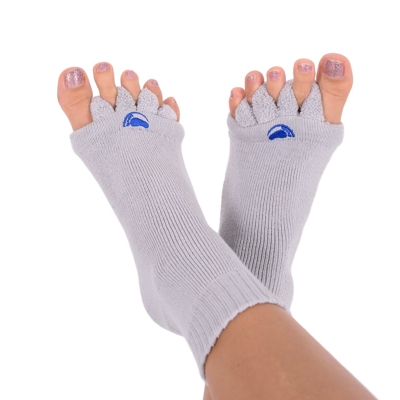
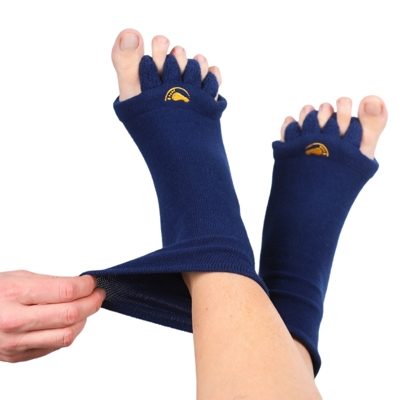
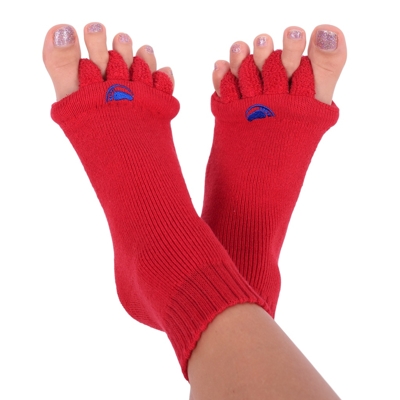
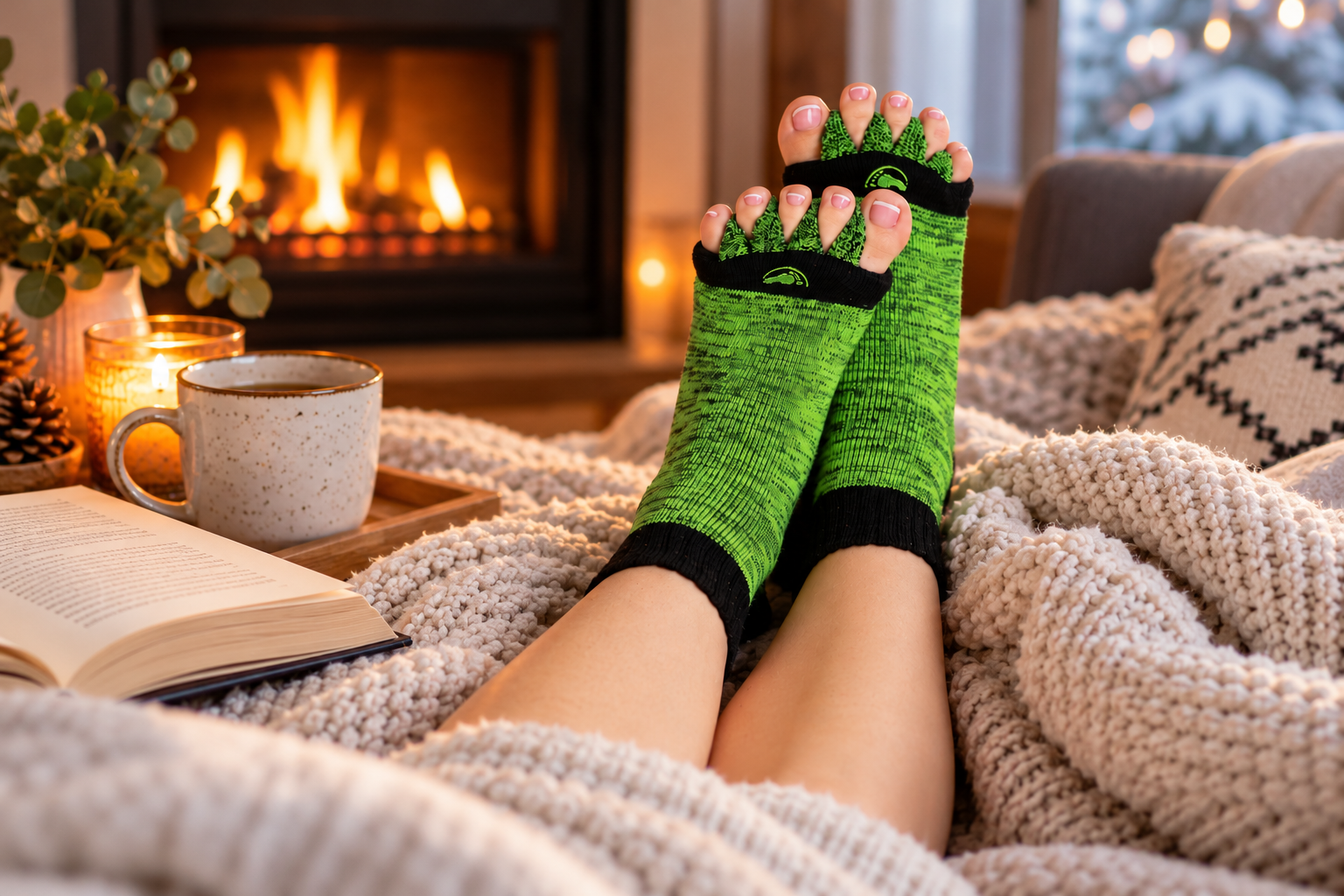
Foot Alignment Socks are a natural addition to your evening routine. Their soft fabric toe separators give your toes the space they've been missing inside your shoes all day and gently relieve tension throughout the forefoot. They also keep your feet warm, making them ideal for relaxing in front of the TV or reading on the sofa. Wear them only while resting, never inside shoes. If you're new to using them, give your feet time to adjust and gradually increase how long you wear them. For help choosing the right size, read our article How to Choose the Right Size of Foot Alignment Socks.
One thing is important to remember: wearing Foot Alignment Socks in the evening cannot undo a full day of pressure from shoes that are too narrow. They complement properly fitting footwear and regular movement, rather than replacing them. The foundation of healthy feet is still footwear that gives your toes enough room.
When to Pay Attention to Warning Signs
If you experience pain in your toes or forefoot while wearing winter shoes, even after switching to roomier footwear, or notice that your big toe is starting to turn towards the other toes, don't wait until spring to address it. Make an appointment with a physiotherapist or podiatrist. An examination using a podoscope can reveal how you distribute weight across your feet, and a specialist can recommend the next steps. The sooner you take action, the better your chances of addressing the problem without surgery.
You may only buy winter shoes once every few years, but you'll spend hundreds of hours wearing them. That's why it's worth taking a few extra minutes to choose the right pair. Give your toes enough room, don't buy a smaller size thinking it will keep your feet warmer, and let your feet relax and move freely in the evening. Your feet will thank you when spring arrives.
Illustrative images were created using artificial intelligence.