
Foot Alignment Socks vs. Toe Correctors: Which Is Better and When Should You Use Each?
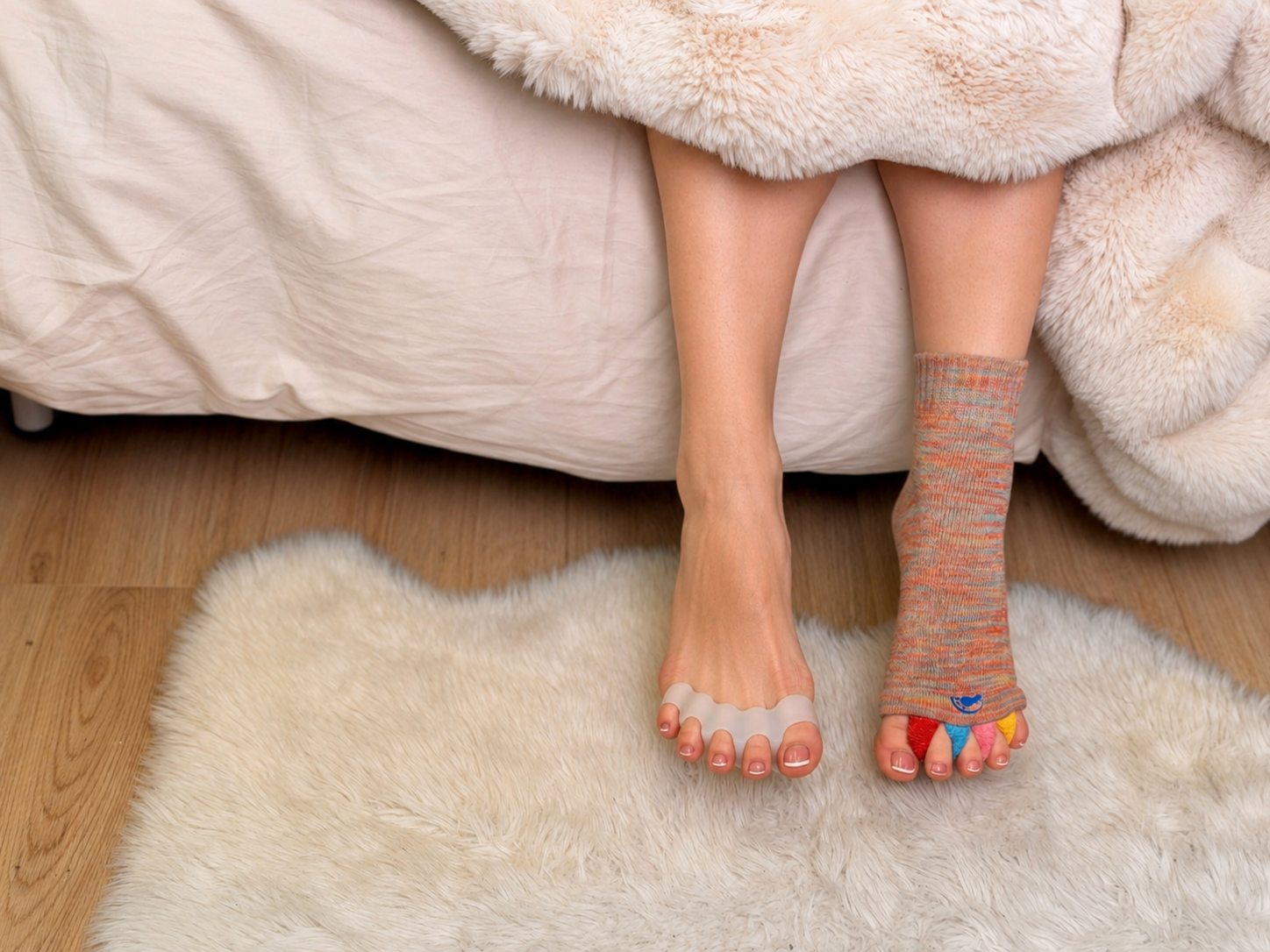 Bunions (hallux valgus), crowded toes, hammertoes, or simply the feeling that your feet could use some relief after a long day. When you start looking for a suitable solution, you'll quickly come across toe correctors, toe separators, and Foot Alignment Socks. At first glance, they all serve a similar purpose: to separate the toes and give them more room. However, there are several important differences between them.
So, are traditional toe correctors or Foot Alignment Socks the better choice? There is no single winner for everyone. It mainly depends on the problem you're trying to address and what you expect from the product. Let's take a closer look at both options.
What Exactly Do Toe Correctors Do?
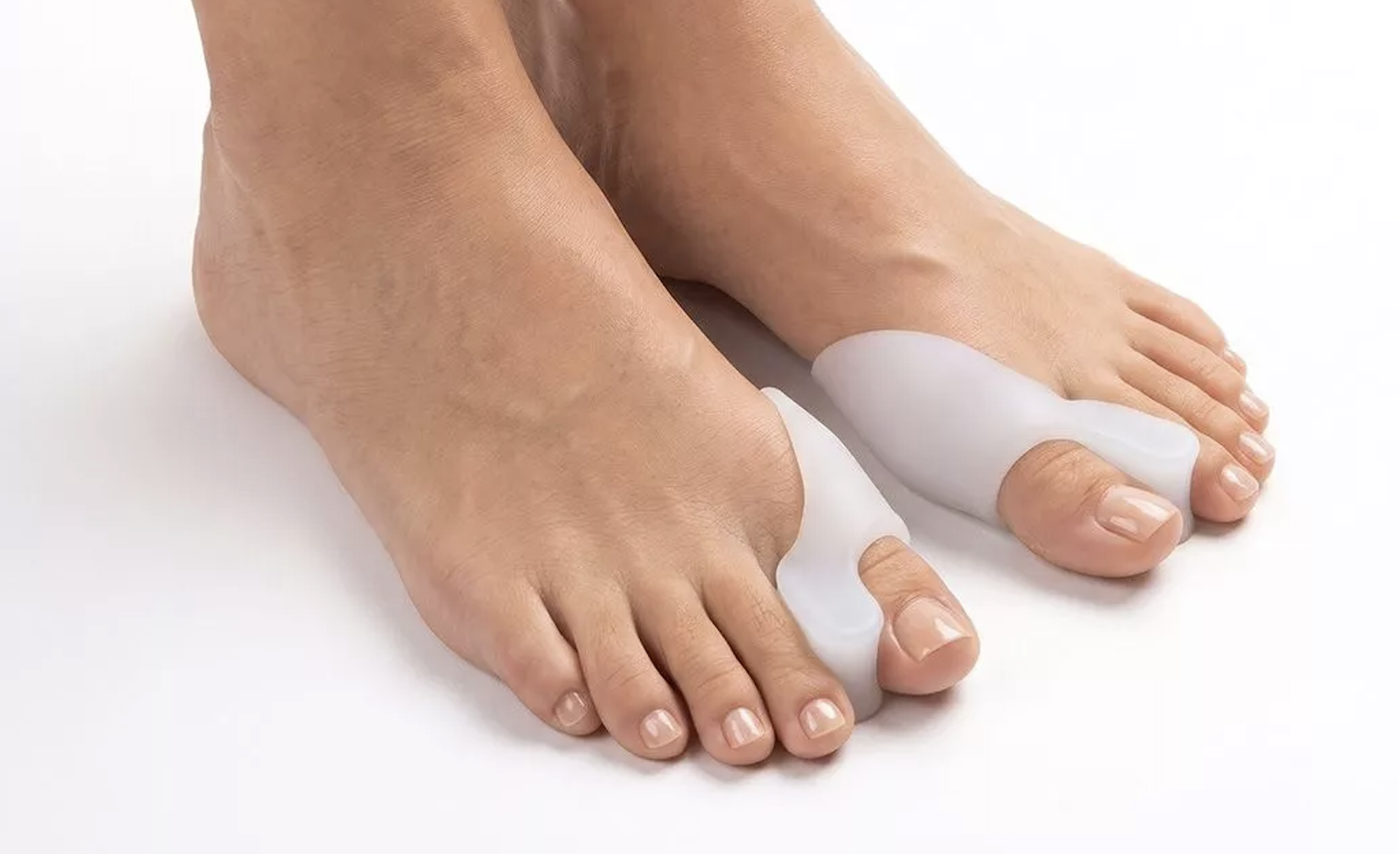
The term toe corrector covers a wide range of products. These may include a simple silicone separator placed between the big toe and the second toe, wider separators for several toes, toe sleeves, or various splints designed, for example, to address bunions.
Most of these devices work passively. They apply external pressure to the toe, helping to guide it into a more favourable position or at least preventing the toes from pressing too tightly against one another.
Toe separators are most commonly used for hallux valgus, also known as bunions. And they are not simply a trendy product without any scientific basis. Systematic reviews of clinical studies suggest that orthoses incorporating toe separators may help reduce pain and improve big toe alignment in some patients. However, the quality of the available evidence is not strong enough to conclude that a toe corrector can reliably "straighten" a bunion.
The UK's National Health Service (NHS) also lists toe spacers among conservative treatment options that may help primarily with bunion symptoms.
And How Do Foot Alignment Socks Work?
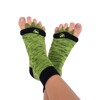
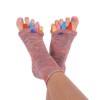
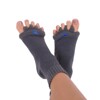
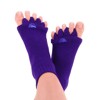
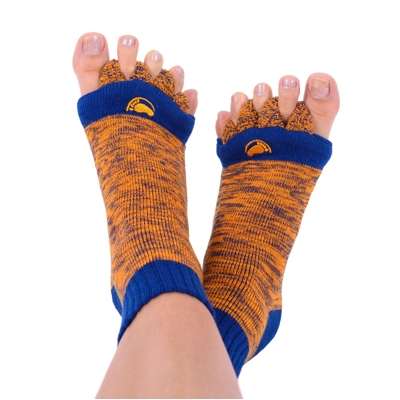
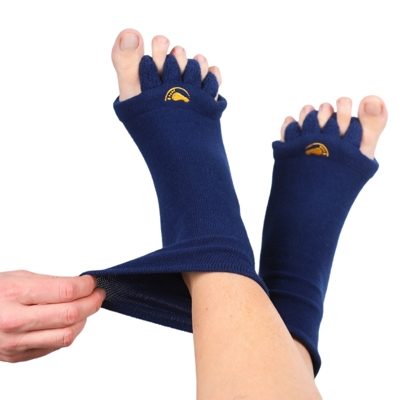
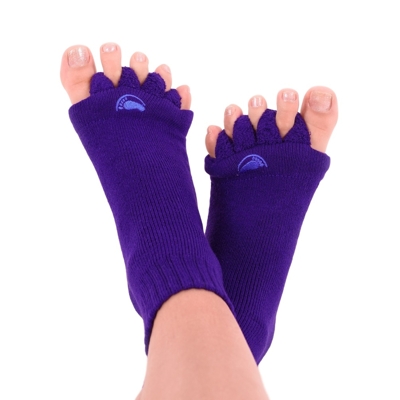
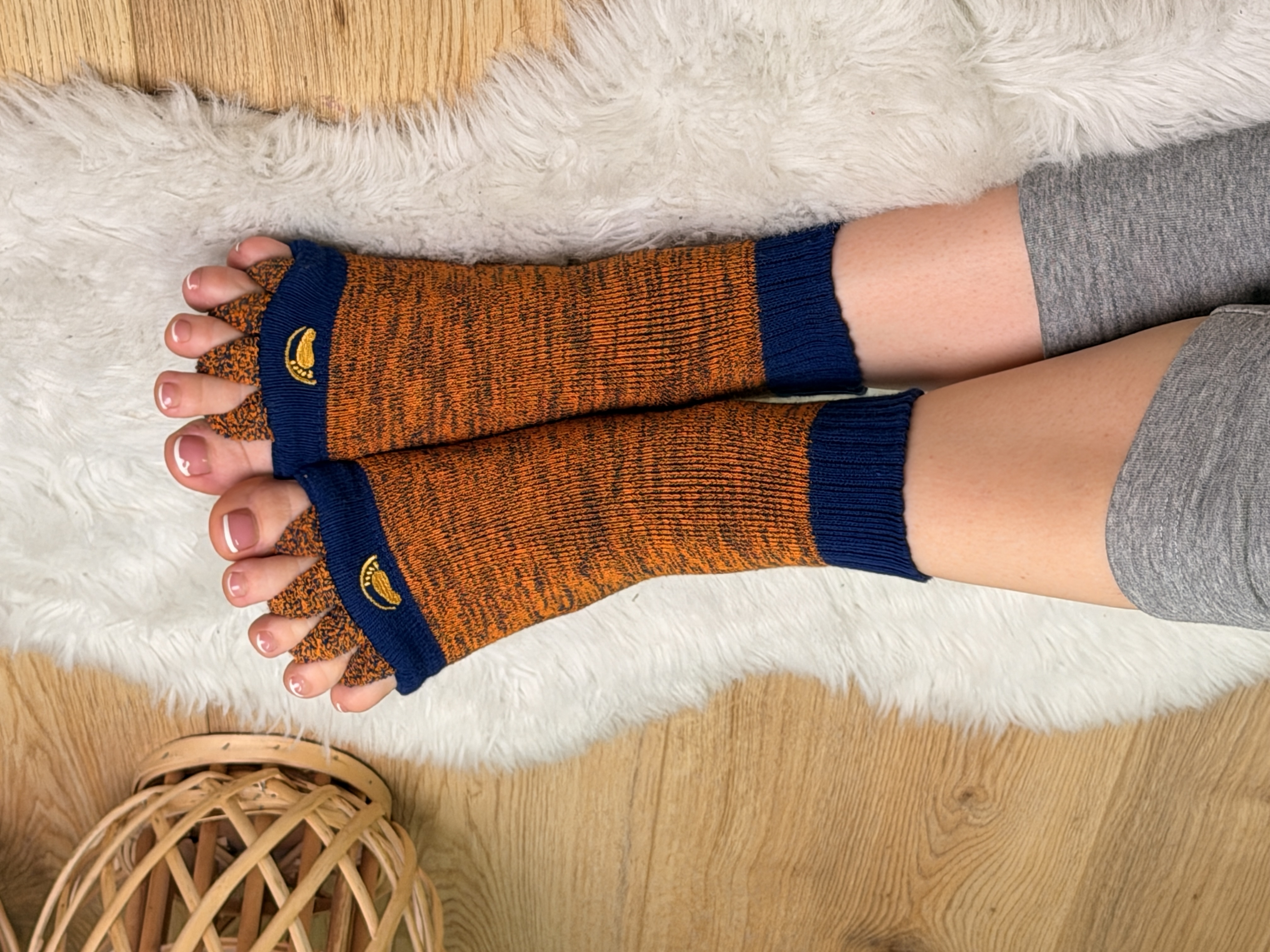
Foot Alignment Socks are based on the same basic principle: they create space between the toes. However, instead of a single silicone corrector, they feature four fabric toe separators integrated directly into the socks.
Some wider silicone toe correctors with four separators also work with all the toes at once. The main difference between Foot Alignment Socks and these products is therefore not the number of separators, but their design.
A silicone toe separator is a separate device made from a firmer material that stays in place between the toes. In Foot Alignment Socks, the separators are made from fabric and integrated directly into the socks. This makes them soft, comfortable to wear, warm to the touch, and able to stay in place even during extended periods of rest.
However, they are not a substitute for physiotherapy, nor can they correct the underlying cause of a toe deformity on their own. It is better to think of them as a complement to active foot care, just like other toe separators.
In fact, this is the approach we have consistently recommended on our blog. For bunions, we recommend not only passive stretching but also exercises to activate the foot muscles and support the transverse arch. You can find detailed instructions in our article Exercises for Bunions That Can Help.
The Biggest Difference: One Toe vs. the Entire Forefoot
Imagine, for example, that you're developing a bunion, but your other toes still have plenty of room and aren't causing any problems. A simple toe corrector placed between the big toe and the second toe may be a perfectly adequate choice.
The situation is different if all your toes feel cramped, overlap, are beginning to curl, or your forefoot feels stiff. In this case, a device that separates all five toes rather than focusing solely on the big toe may be more suitable. Both wider silicone separators designed for all toes and Foot Alignment Socks can serve this purpose.
However, Foot Alignment Socks offer a practical advantage over separate silicone toe separators when it comes to comfort. Their fabric separators are soft, don't feel cold against the skin, and stay securely in place because they're integrated into the socks. This makes separating the toes across the entire forefoot more comfortable, even during extended wear.
They create space between every pair of adjacent toes. That's why we recommend them not only as part of bunion care but also as a complement to the management of crowded or crooked toes and early-stage hammertoes.
With hammertoes and other toe deformities, however, it's always important to determine whether the affected toe can still be straightened passively. In cases of advanced, rigid deformities, toe separation alone is understandably not enough, and a professional assessment is recommended. You can learn more about how these deformities develop in our article What's the Difference Between Hammertoes and Claw Toes?
A Toe Corrector May Be More Practical During the Day
To be fair, traditional toe correctors have one significant advantage.
Some small silicone toe correctors can also be worn comfortably inside shoes, provided there is enough room. This means they can help keep specific toes separated while walking or going about your daily activities.
Foot Alignment Socks, on the other hand, are designed primarily for a different purpose. They are intended to be worn gradually during rest, allowing your toes to spread freely without pressure from footwear. We recommend starting with short periods of wear and gradually increasing the duration. We've explained the guidelines for wearing them, including whether you can sleep in Foot Alignment Socks, in a separate article.
So, if you experience pain caused by your big toe rubbing against your second toe while walking, a small toe corrector may be more suitable during the day. In the evening, while relaxing and recovering, you can use Foot Alignment Socks to separate all your toes.
These two types of products don't necessarily have to be mutually exclusive.
Why Simply Spreading Your Toes Apart Isn't Enough
There's one important thing to remember here that is often overlooked when using toe correctors.
The foot is not simply a collection of bones that can be mechanically moved into the correct position. It is an active musculoskeletal system made up of bones, joints, muscles, tendons, and ligaments.
For example, if your big toe has been angled towards the other toes for a long time, simply pushing it back into position with a toe corrector for two hours every evening is not enough to address the underlying cause of the problem.
When managing bunions (hallux valgus), it is also essential to consider foot muscle function, big toe mobility, how weight is distributed across the foot when standing and walking, the function of the foot arches, and footwear.
This is why the findings of a systematic review of studies on conservative treatment for hallux valgus are particularly interesting. One of the most promising approaches was combining exercises with a toe separator, rather than relying on a passive device alone.
This aligns closely with how we should approach these products from a physiotherapy perspective: first, create space between the toes and help them relax, while also teaching the foot to actively make use of that space.
When You're Dealing with Bunions (Hallux Valgus)
Let's take the most common example.
The big toe gradually starts to angle towards the other toes. If the deformity is still flexible, meaning the big toe can still move freely, it makes sense to focus on improving its mobility and active control.
In this case, both products may be suitable.
A traditional toe corrector is particularly useful if you want to create space specifically between the big toe and the second toe.
Foot Alignment Socks may be a good option if you also want to separate the other toes and address the entire forefoot.
However, regular exercise remains the most important part of care. For example, you can try actively moving your big toe away from the other toes or exercises that activate the transverse arch of the foot. You'll find detailed instructions in our previously mentioned article Exercises for Bunions That Can Help.
For a broader overview of conservative treatment options, read our article How to Correct Bunions Without Surgery.

When You Have Crowded or Overlapping Toes
his is where we believe the practical benefits of Foot Alignment Socks become most apparent.
If the problem isn't limited to the big toe, but your toes are constantly pressed together, a single small toe corrector only addresses part of the issue.
Foot Alignment Socks feature separators in all four spaces between the toes. This means you don't need to put on several individual separators while resting, and each toe has its own space.
This can be particularly comfortable after a day spent wearing closed-toe shoes. However, it's equally important to consider why your toes keep getting squeezed together during the day. If the toe box of your shoes is too narrow, separating your toes in the evening cannot undo the effects of several hours of daily compression. We've explored the potential consequences of wearing shoes that are too small or too narrow in a separate article.
That's why we consider having enough room for your toes inside your shoes absolutely essential.
When You're Dealing with Hammertoes
For early-stage, flexible toe deformities, conservative care may include toe mobilisation, exercises targeting the foot muscles, and appropriately selected toe separation or support. That's why, on our blog, we recommend a combination of roomy footwear, mobilisation exercises, recovery, and other supportive measures for hammertoes and claw toes.
However, if a hammertoe has become rigid, we cannot expect Foot Alignment Socks or a silicone toe corrector to straighten it. The longer the deformity has been present and the less mobile the toe becomes, the more important it is to seek a professional assessment.
What About a Fallen Transverse Arch?
The transverse arch is located in the forefoot. Its proper function influences how weight is distributed across the foot and is also closely linked to toe function. We've explained the anatomy of the foot arches in more detail in our article The Difference Between the Transverse and Longitudinal Arches and Tips for Supporting Their Function.
However, neither toe correctors nor Foot Alignment Socks can strengthen the muscles supporting the foot arch on their own. This requires active foot exercises.
Separating the toes can help create favourable conditions for subsequent exercises, but no device can activate your muscles for you. For inspiration, take a look at our article Exercises for Flat Feet, which focuses specifically on strengthening the foot arches.
Foot Alignment Socks vs. Toe Correctors: At a Glance
A traditional toe corrector is generally most suitable when you want to address a specific area, typically separating the big toe from the second toe. Some smaller models can also be worn inside sufficiently wide shoes, and their main advantage is their simplicity. There are also wider silicone toe correctors with four separators that, like Foot Alignment Socks, work with the entire forefoot.
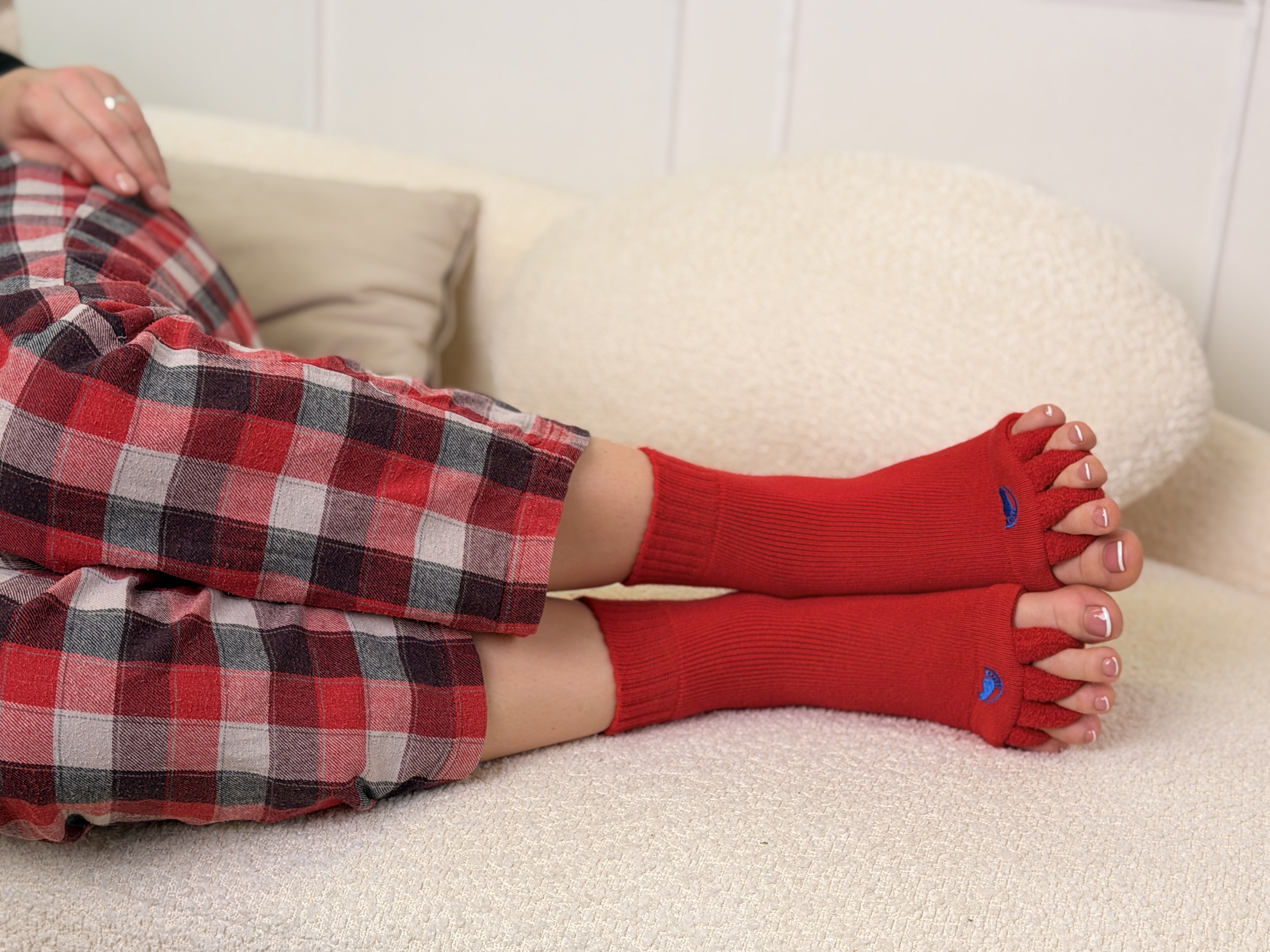
Foot Alignment Socks separate all five toes simultaneously. This makes them a particularly appealing option for evening foot care and recovery, especially if you want to focus not only on the big toe but also on creating space throughout the entire forefoot.
Their main practical advantage over silicone devices is comfort. The fabric separators are soft, pleasant to wear, and don't feel cold against the skin. Because they're integrated into the socks, they stay securely in place and are suitable for longer periods of evening wear. This makes them a natural addition to a regular at-home foot care routine.
However, this doesn't mean that Foot Alignment Socks have been proven more effective than all other toe correctors. There are currently no high-quality clinical studies directly comparing Foot Alignment Socks with individual types of toe correctors. Research supports the general principle of toe separation as part of conservative care, particularly for hallux valgus, rather than the superiority of any specific product. We summarise the findings of Czech university research projects investigating Foot Alignment Socks in our article What Does Research Say About the Effectiveness of Foot Alignment Socks in Treating Bunions?
So, Which Is Better?
If you're expecting us to simply say "Foot Alignment Socks," that would only be half the story.
For an isolated problem affecting a single toe, a targeted toe corrector may be more practical. However, if you want to create space between all your toes and relieve tension throughout the forefoot, Foot Alignment Socks offer a more comfortable option thanks to their soft fabric separators and pleasant fit.
And the best results usually don't come from choosing a single miracle product.
From a physiotherapy perspective, a combination of the following makes much more sense:
Proper footwear + regular exercises + sufficient physical activity + addressing the underlying cause + a suitable passive support device when needed.
Both toe correctors and Foot Alignment Socks can play a valuable role in that final part.
If you choose Foot Alignment Socks, start gradually. Give your feet time to get used to toe separation and increase the wearing time according to your comfort level. Before purchasing, make sure you know how to choose the right size. Most importantly, remember that the socks are designed to support foot care, not replace active foot exercises and movement.
If you experience persistent toe pain, notice that a deformity is getting worse, can no longer straighten a toe manually, or have significant difficulty walking, we recommend consulting a physiotherapist, podiatrist, or orthopaedic specialist. The sooner you address the underlying cause, the more conservative treatment options are generally available.